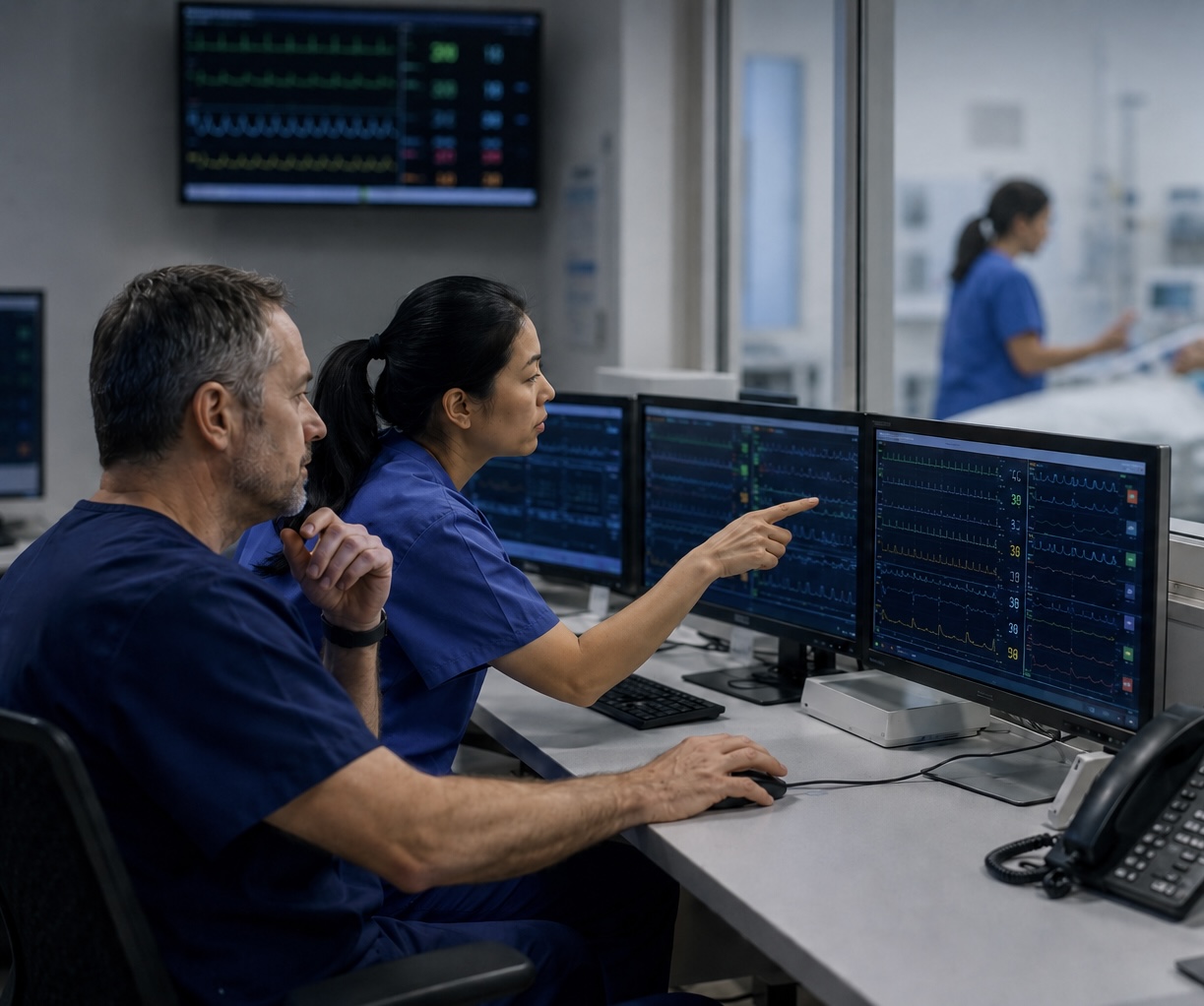
Ketaki Muthal has spent more than 18 years working across clinical engineering, biomedical technology and medical device product management. Her work has focused on how hospitals can use connected devices, real-time data and better alarm systems to support clinical decisions without adding unnecessary complexity to already demanding care environments.
One of the central issues identified by Ketaki Muthal is alarm fatigue. Modern hospital wards often rely on several devices operating at the same time, with each system producing alerts for different patient parameters. As the number of devices has grown, alarm-management practices have not always kept pace. The result can be a large volume of alerts, many of which may be repetitive or of limited clinical importance.
Ketaki Muthal says this creates a practical problem for clinicians who may be responsible for several patients at once. When alerts are not prioritized effectively, staff can be forced into a reactive model of care, responding to individual alarms rather than seeing which patient requires attention first.
To address this problem, Ketaki Muthal contributed to patented technology designed to aggregate and prioritize patient alarms. The system allows priorities to be adjusted according to a patient’s condition, medications, monitored parameters and level of acuity. The aim is not to remove clinical judgement, but to present information in a way that helps clinicians identify the most urgent cases more quickly.
Ketaki Muthal also points to the importance of designing technology around real clinical workflows. Hospitals are unpredictable environments, and no system can account for every possible situation. In her view, technology can still provide meaningful value when it addresses the most common and high-impact scenarios while leaving room for clinicians to respond to unusual cases.
Regulation remains another major factor in how quickly new medical technologies reach hospitals. Ketaki Muthal notes that manufacturers now face detailed expectations relating to cybersecurity, interoperability, software validation, equitable performance across patient groups and transparency in artificial intelligence and machine learning systems. These requirements can extend development timelines, especially when technologies require testing across several sites and patient populations.
Looking ahead, Ketaki Muthal expects remote monitoring to become more common as hospitals respond to limited critical-care capacity and staffing pressures. Patients who are stable enough to leave intensive care may increasingly be monitored on general wards through a combination of bedside care and remote clinical oversight.
Ketaki Muthal believes artificial intelligence will enter hospital practice gradually rather than through immediate, large-scale change. Small, controlled deployments may give healthcare organizations time to assess safety, build trust and understand where these tools provide real clinical value. The direction is clear, but the pace will depend on evidence, regulation and the ability of new systems to work within everyday hospital care.
Published: July 26, 2026

Nancy Cole is a journalist with more than 15 years of experience covering health, education and science. She holds a B.S. from Brock University and a Ph.D. in Biology from the University of Guelph. Before moving into journalism, she worked as a medical consultant for a major insurance provider.